




10 min read

Your Business Has a Financial Plan. Does It Have a Technology Plan?

Your Business Has a Financial Plan. Does It Have a Technology Plan?
18:44

TL;DR: Most businesses have an IT budget. Very few have an IT strategy. This guide breaks down what an IT strategy actually is, how a business technology roadmap turns that strategy into action, and why vCIO services have become the smartest way for growing businesses to get executive-level technology leadership without the executive-level price tag.


If you've ever run a business without a budget, you already know how that story ends: surprise expenses, missed opportunities, and a lot of explaining to do at the end of the quarter. Technology spending works exactly the same way, except most businesses don't realize they're winging it until something breaks.

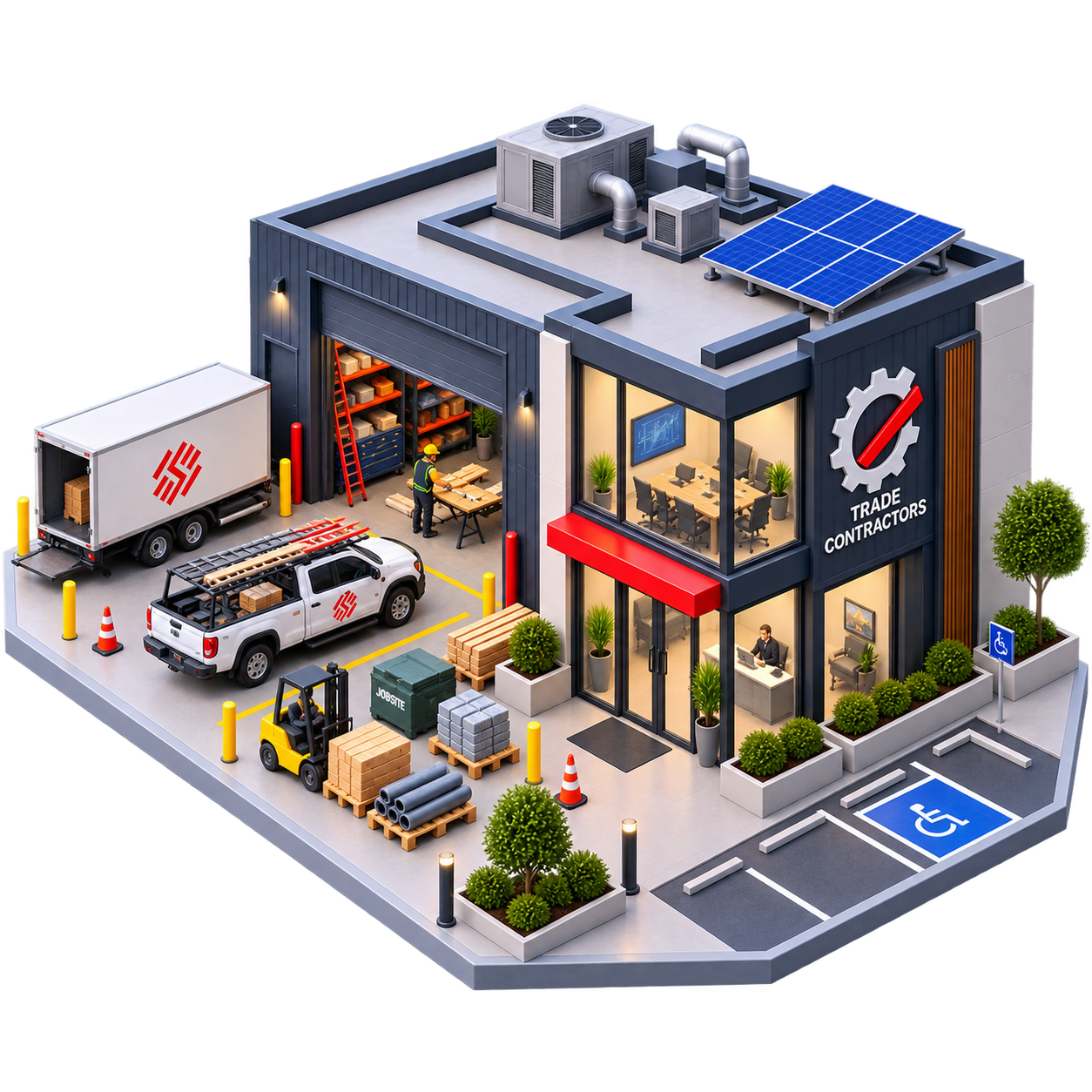
Think of it like building a house without blueprints. You can buy lumber, hire contractors, and make a lot of decisions along the way. You might even end up with something livable. But you'll spend more than you planned, redo things you got wrong the first time, and never quite get the house you actually wanted. An IT strategy is the blueprint. Without one, you're just buying materials and hoping for the best.

Here's what's making this more urgent right now: technology decisions that used to be optional are becoming mandatory. Cyber insurance requires it. Compliance frameworks require it. Employees expect it. And as businesses grow, the gap between companies that manage technology intentionally and those that react to it keeps widening. That gap shows up in unplanned expenses, security incidents, and board meetings where nobody can quite explain the technology line item.

IT strategy sits at the center of how modern businesses operate, scale, and stay protected. It's not a tech department problem; it's a business leadership problem. And it's one that more and more owners and operators are finally treating that way.

This guide breaks down what an IT strategy actually is, how it connects to the way your business grows, and what it looks like to finally have someone in your corner who makes it all make sense.

Table of Contents

  1. What Is an IT Strategy?
  2. IT Strategy vs. Traditional IT Support
  3. Why Your Business Needs an IT Strategy Now
  4. What Is a Business Technology Roadmap?
  5. What Are vCIO Services?
  6. How the Roadmap and vCIO Build Your IT Ecosystem
  7. The Real Value of an IT Strategy…And the Real Cost of Skipping One
  8. Your Technology Should Have a Plan. Now It Can.
  9. Key Takeaways
  10. Frequently Asked Questions

What Is an IT Strategy?

An IT strategy is the high-level plan that defines how your technology will support your business goals over time. Think of it as the "why" behind every technology decision you make. It answers the big questions: Where is the business today? Where does it need to be in one, three, or five years? And what technology decisions will close the gap between the two?

A strong IT strategy isn't a list of software licenses or a hardware refresh schedule. It's a business planning document that connects technology investments directly to outcomes you actually care about: revenue growth, customer retention, operational efficiency, and risk reduction. When done right, it turns your technology from a scattered collection of tools into a deliberate, connected ecosystem where every piece serves a larger purpose.

Building that ecosystem starts with a simple but honest assessment. You take inventory of what you have, define where the business is heading, identify the gaps, and then sequence your investments so each one builds on the last. Instead of buying a tool to solve today's headache and discovering next quarter that it doesn't talk to anything else you own, every new addition gets evaluated against the whole. The result is an environment where your systems integrate cleanly, your spending is predictable, and your technology scales alongside the business rather than buckling under it.

IT Strategy vs. Traditional IT Support

Here's a distinction that trips up a lot of business owners, and getting it right changes everything.

Traditional IT support keeps the lights on. When a server fails, support fixes it. When an employee can't log in, support sorts it out. When malware shows up, support cleans it up. It's reactive by design: something breaks, and someone makes it work again. That work is absolutely necessary, and you can't run a business without it.

But support answers the question "Is it working right now?" An IT strategy answers a much more important question: "Is our technology still serving where the business is heading?" Strategy is proactive and forward-looking. It's the navigator deciding the route, while support is the mechanic keeping the engine running. You need both. The trouble is that almost every growing business has plenty of capacity for support and almost none for strategy. (If that last sentence stung a little, you're not alone.)

Research consistently shows that IT teams spend 70 to 90 percent of their time reacting to incidents, supporting users, and handling system failures, leaving almost nothing for the strategic work that actually moves the business forward. No time to optimize means more to react to. Breaking that cycle is exactly what an IT strategy is built to do.

Why Your Business Needs an IT Strategy Now

You might be thinking your current setup is fine. Systems are running, people are working, nothing's on fire. And honestly, that's a reasonable place to be. Until it isn't.

The gap between "working today" and "ready for tomorrow" is wider than most leaders realize, and it compounds quietly until something forces the issue. Technology, cybersecurity threats, and business conditions all change faster than an annual planning cycle can keep up with. By the time the next budget cycle rolls around, organizations running on yearly updates are often already a year behind actual conditions.

According to Gartner's 2024 CIO and Technology Executive Survey, only 48 percent of digital initiatives meet or exceed their business outcome targets. The other 52 percent underperform, largely because technology decisions were disconnected from business strategy. That's not a technology failure. It's a planning failure.

The numbers on the security side are just as sobering. IBM's 2025 Cost of a Data Breach Report puts the global average cost of a breach at $4.88 million, with U.S. organizations facing significantly higher figures. Add evolving compliance requirements like HIPAA, SOC 2, and PCI-DSS, plus cyber insurers asking considerably harder questions than they were two years ago, and the case for planning ahead becomes difficult to argue with. The cost of keeping your strategy current is a fraction of the cost of catching up after it's fallen behind.

What Is a Business Technology Roadmap?

If the IT strategy is the "why," the business technology roadmap is the "how and when." It's the actionable, time-bound plan that translates your high-level goals into specific actions, timelines, and budgets, typically covering the next 12 to 36 months.

A well-built roadmap lays out exactly what's coming and what it'll cost. That includes:

  • A timeline of upcoming initiatives, system upgrades, and vendor changes
  • Expected costs broken down by quarter and by type: one-time purchases, recurring subscriptions, and renewals
  • Strategic priorities tied directly to your business goals
  • End-of-life planning for aging systems before they become security liabilities
  • Projects "in consideration" so future costs land on a timeline you can adjust as priorities shift

The single biggest payoff of a roadmap is the end of surprises. Instead of getting blindsided by a $40,000 quarter when three aging servers fail at once, you see it coming and budget for it. Instead of discovering you're paying for two tools that do the same job, you spot the overlap and consolidate. A 2025 Deloitte survey found that 61 percent of IT leaders identified vendor consolidation as their single most effective lever for optimizing technology spend, and a roadmap is what surfaces those opportunities in the first place.

One important point: a roadmap is a plan, not a prescription. The best ones are living documents, reviewed quarterly and updated as your business evolves. You stay in control of what gets approved and when, while always keeping a clear view of what's around the corner. Budgets are plans, not promises, and a good roadmap flexes right alongside your business.

What Are vCIO Services?

Here's where the strategy and the roadmap get an owner.

A vCIO (virtual Chief Information Officer) is a senior technology leader who provides executive-level IT guidance on a fractional basis. You get the oversight, governance, and commercial discipline of a seasoned technology executive without the full-time salary. And that salary is no small consideration: a full-time CIO commands total annual compensation between $245,000 and $428,000, according to 2025 Glassdoor data. For a growing business, that's a steep fixed cost for a single function. Fractional vCIO services deliver comparable strategic leadership for a fraction of that figure, which is why the model has become so popular among businesses that need direction without the overhead.

A vCIO isn't a consultant who hands you a report and disappears. They're embedded in your business on an ongoing basis, and they own four core functions:

  • Roadmap ownership: They build and maintain your technology roadmap as a living document, keeping it aligned to where the business is going.
  • Vendor governance: They track contracts and renewal dates, evaluate vendor performance, and renegotiate or replace underperformers before auto-renewal locks you in.
  • Security and compliance planning: They keep your risk posture current and defensible to insurers, regulators, and auditors.
  • Budget forecasting: They plan capital and operational spending across a multi-year horizon, so you're allocating around known needs instead of reacting to emergencies.

Most importantly, a vCIO becomes the named individual accountable for your technology strategy. The absence of that single owner is one of the most consistent reasons technology planning falls apart, and the vCIO role exists specifically to fill it.

How the Roadmap and vCIO Build Your IT Ecosystem

The IT strategy, the technology roadmap, and the vCIO aren't three separate purchases. They're three parts of one connected system, and they work best together.

Think of it this way. Your IT strategy sets the destination: the business outcomes you're aiming for. Your roadmap is the turn-by-turn route, sequencing every investment, upgrade, and decision to get you there on time and on budget. Your vCIO is the navigator who built the route, watches the road for changes, and adjusts the plan when conditions shift. Without the navigator, even a great roadmap goes stale the moment business priorities change. (And business priorities always change.)

In practice, the vCIO starts with a complete assessment of where you are today: your hardware, software, vendor contracts, and security posture. That baseline becomes the foundation for the roadmap. From there, every new tool gets evaluated against your existing stack before anyone signs a contract, and growth plans get their technology implications mapped out in advance rather than discovered mid-implementation.

The result is an environment where the pieces fit together on purpose. Your systems integrate instead of fighting each other, your spending is predictable instead of reactive, and when the business decides to make a big move, the technology is ready before the question even comes up.go

The Real Value of an IT Strategy…And the Real Cost of Skipping One

When you put a strategy, a roadmap, and a vCIO in place, the payoff shows up across the business in ways leadership can actually measure:

  • Predictable, optimized spending. Lifecycle replacement schedules and multi-year forecasting eliminate surprise expenses. Companies using vCIO services report measurable efficiency gains and meaningful reductions in technology-related risk.
  • Technology that scales with you. When you decide to expand, hire, or launch something new, the infrastructure implications are already addressed in the roadmap. Growth accelerates because you're not stopping to retrofit.
  • A stronger security and compliance posture. Proactive planning bakes risk mitigation into every decision, keeping you defensible to insurers, auditors, and regulators instead of scrambling when a deadline or an incident hits.
  • Vendor accountability. Every contract gets tracked, every renewal gets evaluated, and underperforming tools get replaced before they auto-renew. You stop accumulating software you don't use and paying for the privilege.
  • IT as a strategic asset, not a cost center. Leadership finally gets technology decisions explained in business terms, connecting spend to outcomes, instead of staring at an unexplained line item and nodding politely.

The organizations winning with technology right now aren't necessarily the ones with the biggest budgets. They're the ones who spend with intention.

Those costs show up as direct hits: the emergency server purchase, the rushed migration that takes three painful months instead of three smooth weeks, the breach that exploits a gap nobody was watching. They show up as opportunity costs: growth that stalls, onboarding that drags, expansion plans that hit unexpected infrastructure walls. And they show up as risk: exposure you're carrying but haven't measured because nobody's accountable for measuring it.

None of these feels like a "strategy problem" in the moment. They feel like bad luck. But bad luck that keeps happening on a schedule isn't luck at all: it's the predictable result of making six-figure technology decisions on instinct.

The choice was never really between having a strategy and not having one. Every business that uses technology has a strategy by default. The only question is whether yours is actively owned and regularly updated, or managed by circumstance and updated by crisis.

Your Technology Should Have a Plan. Now It Can.

For too many business owners, IT has quietly become the thing that demands attention at the worst possible moment: systems acting up, vendors chasing renewals, security alerts that arrive without context, and an agenda set by whoever's loudest rather than by what the business actually needs. That's not a technology problem. It's an accountability problem, and it's entirely fixable.

The fix is a clear IT strategy, a living roadmap, and a named leader accountable for both. Put those three things in place before your next major technology purchase, and you stop guessing. You start deciding.

Succurri works with small and mid-sized businesses across Arizona, Washington, and Montana to do exactly that. As a local IT partner with a real presence in your market, we bring executive-level strategy, structured roadmapping, and vCIO leadership to businesses that need direction without the overhead of a full-time hire. We know the industries you operate in, we understand the pressure you're under, and we're already in your corner when it matters most.

If your technology has been running you instead of the other way around, let's fix that. Reach out to a local Succurri IT expert today and walk away with a clear picture of where your technology stands and what it needs to get where you're going.

Key Takeaways

  • An IT strategy is the "why" behind your technology: a business plan that connects every tech decision to your goals and builds a connected, intentional IT ecosystem.
  • A business technology roadmap is the "how and when": a 12-to-36-month plan that sequences investments, eliminates surprise costs, and stays flexible as your business evolves.
  • vCIO services provide the owner: executive-level technology leadership and accountability on a fractional basis, at a fraction of the $245K–$428K cost of a full-time CIO.
  • Traditional IT support keeps the lights on. IT strategy decides where the business is going. You need both, but most growing businesses only have one.
  • Together they reduce complexity, improve security, and deliver clear ROI, turning IT from a reactive cost center into a strategic asset.
  • Vendor accountability is one of the most overlooked benefits: tracked contracts, evaluated renewals, and no more paying for software nobody uses.
  • Going without a strategy isn't free: the costs are just hidden in emergency purchases, stalled growth, and unmeasured risk, and they compound every quarter you wait.

Frequently Asked Questions

1. What's the difference between an IT strategy and a business technology roadmap?
An IT strategy defines why you're making technology investments and how they connect to your business goals. A roadmap defines how and when: specific initiatives, timelines, and budgets over a 12-to-36-month horizon. The strategy sets the destination; the roadmap is the route. You need both, reviewed regularly, so they stay aligned with where the business is actually heading.

2. How much do vCIO services cost compared to hiring a full-time CIO?
A full-time CIO typically commands $245,000 to $428,000 in total annual compensation, according to 2025 Glassdoor data. vCIO services are structured as a monthly retainer and deliver comparable strategic leadership: roadmap ownership, vendor governance, security planning, and budget forecasting, at a fraction of that cost. For most growing businesses, it's the more commercially sensible path to the same outcome.

3. How do I know if my business actually needs an IT strategy or a vCIO?
A few clear signals: you can't name a single person accountable for your technology direction, your IT budget keeps getting hit with emergency purchases, your security posture hasn't been formally assessed in the past 12 months, or technology decisions are consistently reactive rather than planned. If any of those land, you have a strategy gap. The good news is it's straightforward to close, and closing it almost always costs less than continuing to go without.

Hurricane Season is Half Over – Be Prepared for Next Year’s

2 min read

Hurricane Season is Half Over – Be Prepared for Next Year’s

We have almost made it through this year’s hurricane season, but unfortunately, this doesn’t mean that businesses will suddenly be safe again....

Read More
Managed Security Services Work to Stomp Out Security Problems

2 min read

Managed Security Services Work to Stomp Out Security Problems

In the course of doing business, many of today’s businesses have encountered some type of major security threat. As these threats get more and...

Read More

2 min read

Social Engineering – Techniques, Examples, Solutions

So, what is Social Engineering? Social Engineering is the art of manipulating, influencing, or deceiving you in order to gain control over your...

Read More